
The area of photonics has actually seen amazing advancements, particularly in the growth of various modulators that play essential roles in various optical applications. Among these, fiber acousto-optic modulators (AOMs) and their lots of variations, such as space AOMs and free-space AOMs, attract attention as a result of their flexibility and effectiveness. An acousto-optic modulator makes use of acoustic waves to regulate the intensity, frequency, or stage of light going through a medium, supplying an effective technique for pulse modulation. With the growing demand for high-resolution and accuracy applications, these devices have actually ended up being important in areas like telecoms, clinical imaging, and clinical study.
These lasers create light with an exceedingly narrow spectral width, making them optimal for different complex applications, consisting of systematic interaction systems and high-resolution spectroscopy. This assimilation demonstrates the fad towards increased compactness and effectiveness in optical systems without compromising efficiency.
The utility of fiber optic delay lines can not be overstated, specifically in developing innovative optical systems that need precise timing and synchronization. These delay lines harness the integral properties of optical fibers to handle light signals successfully, allowing designers and scientists to explore high-speed information transmission or complex timing experiments with very little loss of integrity. The electric fiber optics delay line acts as a main element in this context, facilitating the control of light signals to suit certain demands.
Explore Acousto-optic Q-switch Modulator the most recent improvements in photonics, focusing on the crucial duty of fiber acousto-optic modulators in enhancing laser applications, telecoms, and precision optical systems for varied industries.
Modulators are crucial in laser systems, playing a vital duty in transforming continual wave results right into pulse styles. Acousto-optic Q-switch modulators serve this precise purpose, allowing rapid modulation of laser outputs, which results in high-peak power pulses.
The difference between acousto-optic buttons and modulators is a vital element of understanding exactly how these devices operate in various circumstances. In contrast, a modulator readjusts the light’s properties, straight impacting the light beam’s characteristics.
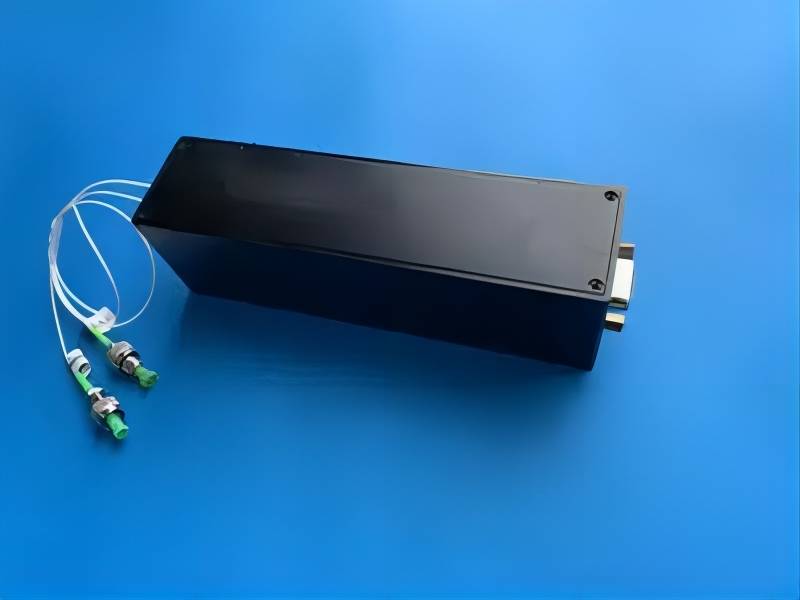
Acousto-optic devices have actually progressively obtained traction in the market, driven by the intensifying need for advanced optical innovations. The acousto-optic modulator market is witnessing significant growth due to applications in telecommunications, armed forces systems, and commercial production.
Additionally, the features of narrow linewidth laser resources are fundamental to particular applications, where coherence and precision are paramount. Narrow linewidth fiber lasers show steady exhaust with very little spooky spread, providing to applications in fiber-optic communications and picking up modern technologies. These qualities are essential when handling long-distance data transmission, where signal degradation can substantially influence the high quality of info received. Coupling these fibers with sophisticated modulators allows scientists to discover new frontiers in optical communication systems.
Acoustic optical deflectors contribute to the versatility of optical systems, providing a method to control light dynamically and effectively by utilizing acoustic waves as the regulating mechanism. Such devices can be discovered in numerous applications, from laser scanning systems to advanced imaging techniques. By making use of the concepts of acousto-optics, these deflectors aid in achieving specific and rapid alterations in the light beam’s trajectory without the need for complex mechanical components.
In discovering the sorts of pulse modulation, one recognizes the intricacies and range inherent in the field. Pulse modulation techniques, such as pulse-width modulation (PWM) and pulse-position modulation (PPM), allow adjustment of light based upon discharge to produce varying signal types. These strategies promote advancements in electronics and photonics, from managing laser outcomes to enhancing the efficiency of fiber optic systems.
Further consideration of optical passive components reveals their indispensable duty in boosting system reliability. These components, which include filters, couplers, and isolators, facilitate the company and monitoring of light within complex optical arrangements without the need for active involvement. Their contribution to general system performance is crucial, largely when incorporated with modulators and other dynamic optical devices. Especially, the smooth combination of passive and energetic components specifies the capability of modern-day photonic systems.
The expanding concentrate on space applications highlights the requirement for reputable and robust optical systems that can work effectively in extreme problems. Space acousto-optic modulators, in certain, accommodate the distinct requirements of space objectives, where factors such as radiation direct exposure and temperature variations can substantially impact capability. The development of space-grade acousto-optic devices makes certain that interaction and information collection continue to be uninterrupted in the harsh environments of space.
Acousto-optic Q-switching stands for among the most efficient approaches of generating high-energy pulses, vital for applications varying from laser marking to clinical treatments. The modulation capacities inherent in AOMs enable them to adapt to varying requirements, enhancing pulse period and energy outcome. They supply an innovative path to elevate laser applications across varied fields.
As we delve further right into the future of photonics, it ends up being increasingly clear that technology in laser modulators and acousto-optic technologies is crucial. The developments in modulator drivers boost the performance with which EOMs and aoms run, allowing quicker and extra trusted efficiency. The crossover between advancements in modulation and the enhancing need for higher transmission capacity and lower latency in communication systems recommends a future rich with chances for reinforced optical interactions.
Understanding the essential auto mechanics that underpin acoustic optical modulators will cause remarkable layout and performance improvements as research remains to grow. The expedition of brand-new products, assimilations, and methods in areas like micro-nano construction will likely yield devices with even better control and extended operational lifetimes. These advancements not just guarantee boosted performance for existing systems however welcome completely brand-new applications within arising innovations in quantum computer, robotics, and progressed production.
In summary, the domain of acousto-optic modulators and related fiber-optic technologies personifies rapid progress and intricacy, offering as fundamental components within several contemporary optical applications. With the growing need for precision and high performance in different industries, the development of acousto-optic devices, such as fiber AOMs, proceeds to evolve, adjusting to new challenges and opportunities. As researchers and designers push the borders of innovation, these devices will certainly continue to be main to forming the future of optical communication, laser applications, and beyond, advertising a brand-new period of technical advancement.