
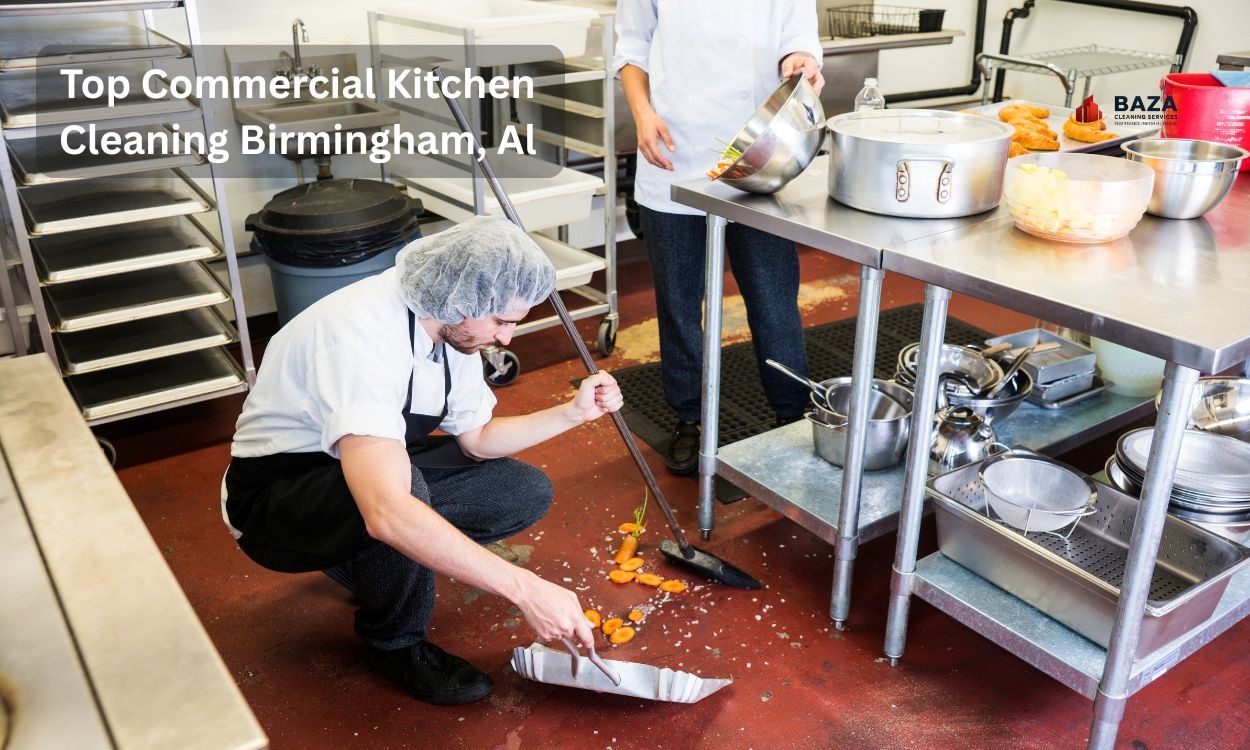
Running a successful restaurant in Birmingham, Alabama, requires much more than great food and friendly service. Behind every memorable meal is a kitchen that must remain clean, organized, efficient, and ready to meet demanding health and safety expectations. From neighborhood diners and barbecue restaurants to hotel kitchens, cafés, food halls, and fine-dining establishments, every commercial food operation depends on a reliable cleaning routine.
Commercial kitchens are exposed to grease, smoke, food particles, moisture, heat, and constant foot traffic. These conditions create an environment where dirt can accumulate quickly, odors can develop, pests can become a concern, and equipment performance can decline. A surface that looks clean at the beginning of a shift may be covered with spills, crumbs, oil, or residue by closing time.
For Birmingham restaurant owners and managers, maintaining a cleaner kitchen is not simply about appearance. It supports food safety, employee productivity, equipment longevity, customer confidence, and day-to-day operational consistency. Restaurants that create structured cleaning plans are often better prepared for inspections, busy weekends, staffing changes, seasonal demand, and unexpected maintenance issues.
Professional providers such as Baza Services LLC can support restaurants that need dependable, customized cleaning assistance. However, even when a restaurant uses an outside cleaning company, managers and employees still benefit from understanding the basic systems that keep a commercial kitchen in good condition.
The following guide explores practical commercial kitchen cleaning tips for Birmingham restaurants, including daily routines, deep-cleaning priorities, equipment care, grease control, employee responsibilities, and the value of professional Restaurant Cleaning in Birmingham, AL.
Why Commercial Kitchen Cleaning Requires a Detailed Plan
A commercial kitchen is very different from a residential kitchen. It operates for longer hours, serves more people, uses heavier equipment, and experiences much faster buildup of food debris and grease. Multiple employees may work in the same space, and cleaning responsibilities can easily become unclear during a busy shift.
Without a written plan, teams may focus only on visible surfaces. Counters get wiped, floors get swept, and trash is removed, but hidden areas may be ignored. Grease can collect behind cooking equipment. Food particles can remain under prep tables. Dust can accumulate around vents. Refrigerator gaskets may become sticky, and floor drains may develop unpleasant odors.
A detailed cleaning plan helps prevent these gaps. It defines what should be cleaned, how often it should be cleaned, who is responsible, and which products or tools should be used. It also separates routine cleaning from sanitizing, degreasing, maintenance, and deep cleaning. In Birmingham’s warm, humid climate, that structure can be especially helpful for controlling odors, residue, and moisture.
Understand the Difference Between Cleaning and Sanitizing
Cleaning and sanitizing are related, but they are not the same process. Cleaning removes visible food, dirt, grease, and residue from a surface. Sanitizing reduces microorganisms on a properly cleaned surface.
A prep table, for example, should first be cleared of crumbs and food scraps. The surface should then be washed with an appropriate cleaner, rinsed when required, and treated with an approved sanitizer according to the product instructions. Applying sanitizer directly over grease or food residue may reduce its effectiveness.
Restaurant employees should understand the correct sequence for food-contact surfaces. Cutting boards, prep counters, slicers, utensils, sinks, and other frequently used areas need special attention. Cleaning tools should also be separated by purpose so that a mop or cloth used in one area does not spread contamination to another.
Color-coded and clearly labeled clothes, buckets, cutting boards, and brushes can help employees keep food-preparation, restroom, dining, and general-cleaning tools separate.
Build a Daily Commercial Kitchen Cleaning Checklist
Daily cleaning is the foundation of a well-maintained kitchen. Tasks should be divided into opening, shift-change, and closing responsibilities so that the entire burden does not fall on the final crew.
An opening checklist may include inspecting floors, checking prep surfaces, confirming that sinks are clean, and making sure cleaning supplies are stocked. During the shift, employees should address spills immediately, empty overflowing trash containers, clean tools between uses, and maintain organized prep stations.
The closing checklist should be more detailed. Common tasks include:
- Cleaning and sanitizing food-preparation surfaces
- Washing sinks and faucets
- Wiping appliance exteriors
- Cleaning stovetops, griddles, and accessible cooking surfaces
- Sweeping and mopping floors
- Cleaning floor mats
- Emptying and washing trash containers
- Removing food debris from drains and strainers
- Cleaning handles, knobs, switches, and other high-touch surfaces
- Restocking soap, paper products, gloves, and cleaning supplies
Checklists should be visible and easy to follow, whether they are laminated sheets, digital tasks, or sign-off forms. Managers should verify completed work through quick inspections that reveal recurring problems or training needs.
Pay Close Attention to Grease Buildup
Grease is one of the most persistent challenges in a commercial kitchen. It can settle on walls, floors, equipment, vents, shelves, and hard-to-reach surfaces. Over time, grease buildup may create slippery conditions, unpleasant odors, pest attraction, and increased fire risk.
Cooking lines should be inspected regularly for splatter and residue. Degreasing should extend beyond the front of the equipment. Areas behind fryers, ranges, ovens, and grills often collect layers of oil, dust, crumbs, and debris.
Restaurants should use products appropriate for each surface, follow product labels, wear required protective equipment, and never mix chemicals. Teams may clean removable grease filters and accessible exhaust surfaces, while specialized hood and duct work should be left to trained professionals. Service frequency depends on cooking volume and the amount of grease produced.
A professional provider of Restaurant Cleaning in Birmingham, AL can help evaluate high-grease areas and develop a schedule that fits the restaurant’s operating needs.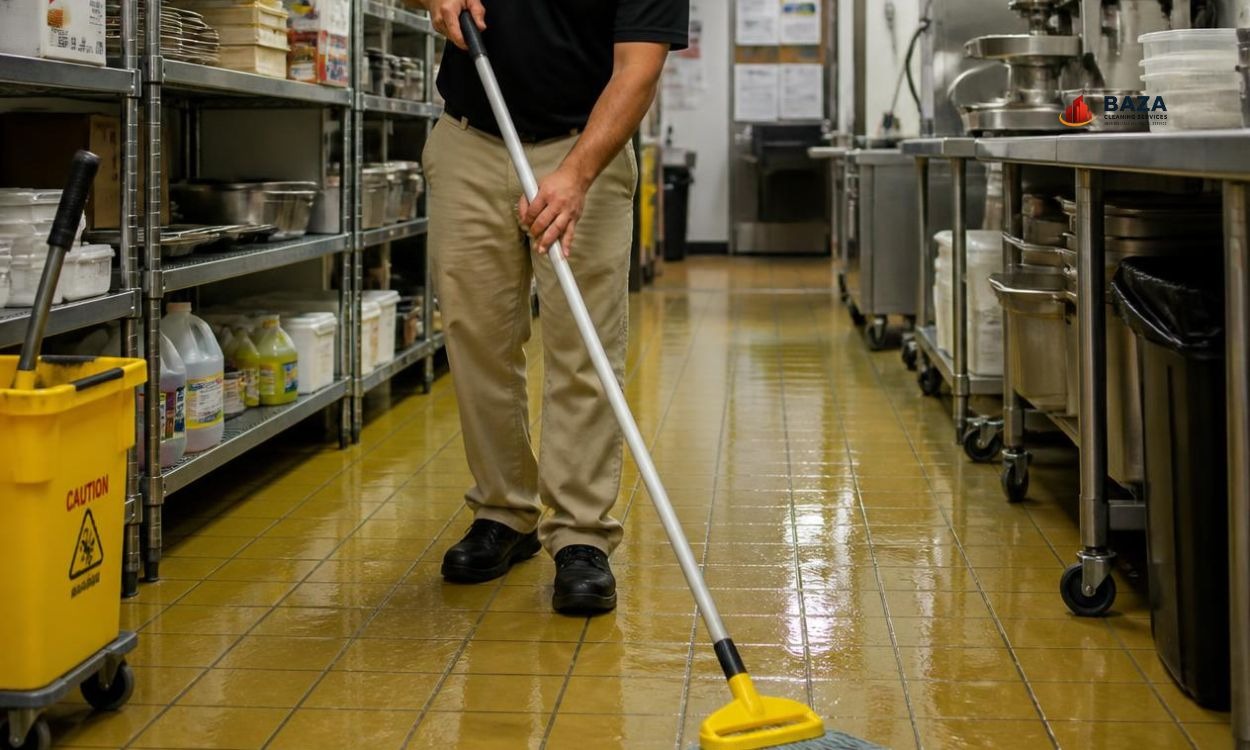
Clean Under and Behind Kitchen Equipment
One of the most common cleaning mistakes is focusing only on areas that employees and customers can see. Dirt behind and underneath equipment may remain unnoticed for weeks or months.
Movable equipment should be pulled away from walls when it is safe to do so. Employees can then sweep, vacuum, degrease, and mop the exposed area. Electrical cords, gas connections, casters, and nearby walls should be inspected carefully. Equipment should never be moved in a way that damages connections or creates a safety hazard.
Large or fixed appliances may require coordination with maintenance professionals, although narrow brushes and commercial vacuums can help with limited-access areas. The spaces beneath prep tables, shelves, sinks, ice machines, dishwashing equipment, and beverage stations should also remain on the schedule.
Maintain Floors Throughout the Day
Commercial kitchen floors can become dangerous very quickly. Water, oil, sauces, food scraps, and cleaning solution residue may create slippery conditions. A strong floor-care routine supports both cleanliness and workplace safety.
Spills should be cleaned as soon as possible. Employees should use warning signs when floors are wet and make sure that the appropriate cleaning method is used for the type of spill.
Sweeping should remove loose debris before mopping. Otherwise, food particles may be pushed into corners, grout lines, or drains. A commercial degreasing floor cleaner may be necessary around cooking stations, but the product should be compatible with the flooring material.
Mop water should be changed when dirty, and mops should be rinsed and stored to dry. Floor edges, corners, baseboards, and areas beneath mats need extra attention. Professional machine scrubbing may help remove buildup from textured tile, grout, and heavy-cooking areas that routine mopping cannot fully address.
Keep Drains Clean and Odor-Free
Floor drains and sink drains can become a source of odor if food particles, grease, or organic residue collect inside them. Employees may not notice a problem until the smell becomes strong enough to affect the kitchen or dining area.
Drain strainers should be emptied and cleaned frequently. Food solids should be placed in the proper waste container rather than washed down the drain. Grease should be handled according to the restaurant’s disposal procedures.
Drain covers and surrounding floors should be scrubbed regularly. Products must be used according to instructions and never mixed. Persistent odors, slow drainage, or backups may indicate a plumbing issue that requires a qualified professional. Preventive daily attention is far more effective than waiting for a larger sanitation or maintenance problem.
Clean Refrigerators, Freezers, and Cold-Storage Areas
Cold-storage equipment is central to restaurant operations, yet it can become cluttered and difficult to clean. Spills may harden on shelves, food may be stored in damaged containers, and expired items may remain unnoticed.
Restaurant teams should use a first-in, first-out system and label products clearly. During routine inspections, employees should remove expired food, wipe spills, clean handles, and check that containers are covered and organized.
Shelves, walls, and interior surfaces should be cleaned using methods approved for food-storage equipment, with products moved to another temperature-controlled location during deeper cleaning. Door gaskets should be wiped and checked for cracks because crumbs and moisture can interfere with a tight seal.
Dust and grease around coils or ventilation areas may affect efficiency, but electrical and mechanical components should be handled according to manufacturer guidance or by qualified technicians. Equipment that cannot hold the proper temperature needs prompt professional inspection.
Give Ovens, Grills, Fryers, and Griddles Individual Cleaning Procedures
Cooking equipment should not be treated as one category. Each appliance has different surfaces, removable parts, manufacturer instructions, and safety considerations.
Griddles may need scraping and cleaning after each service period. Grill grates may require brushing and periodic soaking. Ovens can develop carbonized residue that requires a scheduled deep clean. Fryers need careful handling because hot oil and cleaning products can create serious hazards.
Employees should receive specific training for each appliance. They should know when the equipment must cool, which parts can be removed, what products are safe, and how to prevent damage.
A written equipment-cleaning guide should reflect manufacturer recommendations and restaurant safety procedures. Deep-cleaning frequency depends on cooking volume; heavy barbecue, frying, and high-temperature operations may require more frequent service. Professional cleaners can address external surfaces and accessible grease, while internal repairs belong to trained technicians.
Do Not Overlook Small Appliances and Tools
Large equipment receives a great deal of attention, but small appliances can also collect food residue and bacteria. Mixers, blenders, food processors, slicers, can openers, microwave interiors, coffee equipment, and beverage dispensers all require detailed cleaning.
Removable components should be washed and sanitized according to manufacturer instructions, while fixed parts must be wiped without allowing water into electrical areas. Only trained employees should disassemble slicers or similar equipment.
Ice scoops, utensil holders, knife racks, and storage bins also belong on the schedule, and damaged small wares should be replaced when they become difficult to clean.
Organize Cleaning Supplies Safely
Cleaning chemicals should be stored in a designated area away from food, utensils, single-use items, and food-contact surfaces. Bottles should be labeled clearly, and secondary containers should identify their contents.
Staff should never reuse food containers for chemicals. This can create dangerous confusion. Spray bottles, buckets, and dispensers should be reserved for their intended purpose.
Safety data sheets should be accessible, and staff should understand required precautions, protective equipment, and chemical dilution. Brooms, mops, brushes, squeegees, and clothes should be cleaned after use and stored to dry. Restroom tools must remain separate from food-preparation tools.
Create Weekly and Monthly Deep-Cleaning Schedules
Daily cleaning handles immediate messes, but it may not remove gradual buildup. Weekly and monthly schedules help restaurants address less visible areas and tasks that require more time.
Weekly tasks may include:
- Degreasing walls near cooking equipment
- Cleaning inside refrigerators and reach-in coolers
- Washing shelving and storage racks
- Scrubbing floor edges, grout, and baseboards
- Cleaning underneath movable equipment
- Descaling sinks or dishwashing areas as appropriate
- Washing trash and recycling containers
- Cleaning doors, frames, and push plates
- Inspecting pest-prone areas
Monthly or periodic tasks may include:
- Deep-cleaning ovens and cooking equipment
- Cleaning high walls, ceilings, and vents
- Removing dust from pipes and overhead surfaces
- Machine-scrubbing floors
- Cleaning behind fixed equipment where access is possible
- Reviewing chemical storage and safety data sheets
- Inspecting cleaning tools and replacing damaged items
- Coordinating hood, exhaust, HVAC, plumbing, or equipment maintenance
Frequency should reflect actual use: a high-volume kitchen may need a so-called monthly task every week.
Focus on Walls, Ceilings, and High Surfaces
Grease and dust do not remain at floor level. Warm air can carry particles upward, where they settle on walls, vents, pipes, light fixtures, ceiling tiles, and other high surfaces.
These areas are easy to ignore because they are not part of routine food preparation. Over time, however, buildup can become visible and difficult to remove. It may also contribute to odors or create a poor impression during inspections.
High surfaces require stable equipment and safe procedures; employees should never climb on chairs, counters, boxes, or cooking equipment. Food and equipment below should be protected before overhead work begins. Stained or damaged ceiling tiles may indicate a leak or ventilation problem that cleaning alone cannot solve.
Include Dining Areas, Restrooms, and Entryways in the Plan
A restaurant’s cleaning program should connect the kitchen with the rest of the property. Dirty restrooms, sticky entry doors, dusty vents, or stained dining-room floors can affect the customer experience even when the kitchen is well maintained.
Front- and back-of-house teams should have separate checklists. Door handles, payment areas, menus, railings, chair backs, restroom fixtures, and wet entryways may need attention throughout the day. Exterior trash areas should also be kept free of leaking bags, grease, and food debris.
A professional company such as Baza Services LLC can help restaurants coordinate cleaning across kitchens, dining rooms, restrooms, offices, and shared spaces.
Train Employees Instead of Assuming They Know
Restaurant employees may arrive with different levels of cleaning experience. A worker who has cleaned in one restaurant may have followed procedures that do not match the new workplace.
Training should cover more than a quick tour of the supply closet. Employees should learn:
- Which products are used for each task
- How to dilute or dispense chemicals
- The difference between cleaning and sanitizing
- How long sanitizers must remain on a surface
- Which tools are assigned to each area
- How to clean specific equipment safely
- When to wear gloves or eye protection
- How to report leaks, pests, damage, or equipment problems
- How to document completed tasks
Demonstration is often more effective than verbal instruction. Managers can show the method, observe the employee, and correct mistakes immediately. Refresher training also prevents shortcuts from becoming routine.
Use Cleaning Logs to Improve Accountability
Cleaning logs create a record of when tasks were completed and who performed them. They can help managers identify missed work, repeated trouble spots, and patterns that require attention.
A basic log may include the task, frequency, responsible employee, completion time, and manager verification. Digital systems can add photos, alerts, and recurring assignments, but paper logs can also work well when used consistently.
Logs are useful only when they reflect actual conditions. A drain that still smells or a signed-off floor that remains greasy may signal a need for better training, different products, more time, or professional support.
Schedule Professional Restaurant Cleaning Strategically
In-house employees can manage many routine tasks, but there are times when professional cleaning is a practical investment. A restaurant may need help with deep floor cleaning, grease removal, high surfaces, post-construction cleanup, move-in cleaning, recurring janitorial work, or detailed cleaning before a major event or inspection.
Professional Restaurant Cleaning in Birmingham, AL can also help restaurants maintain consistency when staffing is limited. Instead of asking cooks or servers to complete large cleaning projects after a demanding shift, managers can schedule trained cleaners for specific tasks.
When evaluating a cleaning company, restaurant owners should ask about experience with commercial kitchens, scheduling flexibility, insurance, employee training, quality control, and the types of products and equipment used.
The provider should discuss the restaurant’s layout, hours, priority areas, and safety requirements rather than relying on a one-size-fits-all checklist.
Baza Services LLC can be included in a restaurant’s vendor planning when management is seeking professional cleaning support in the Birmingham area. A customized scope may cover back-of-house, front-of-house, restrooms, floors, high-touch surfaces, and other agreed areas.
Coordinate Cleaning With Equipment and Building Maintenance
A clean kitchen can still experience mechanical problems. Restaurant managers should coordinate cleaning with preventive maintenance for refrigeration, cooking equipment, ventilation, plumbing, and climate-control systems.
For example, cleaning dust and accessible debris around vents may support airflow, but it will not fix a malfunctioning heating system. During cooler Alabama weather, restaurants still rely on dependable indoor comfort for employees and guests. If the building’s heating system is noisy, inconsistent, or not operating correctly, management may need professional Heating Repair Services.
Cleaning teams should report unusual odors, leaks, condensation, damaged seals, electrical concerns, or unfamiliar equipment sounds, but they should not attempt repairs outside their training. A restaurant’s vendor list should include both cleaning and repair professionals so managers can respond quickly.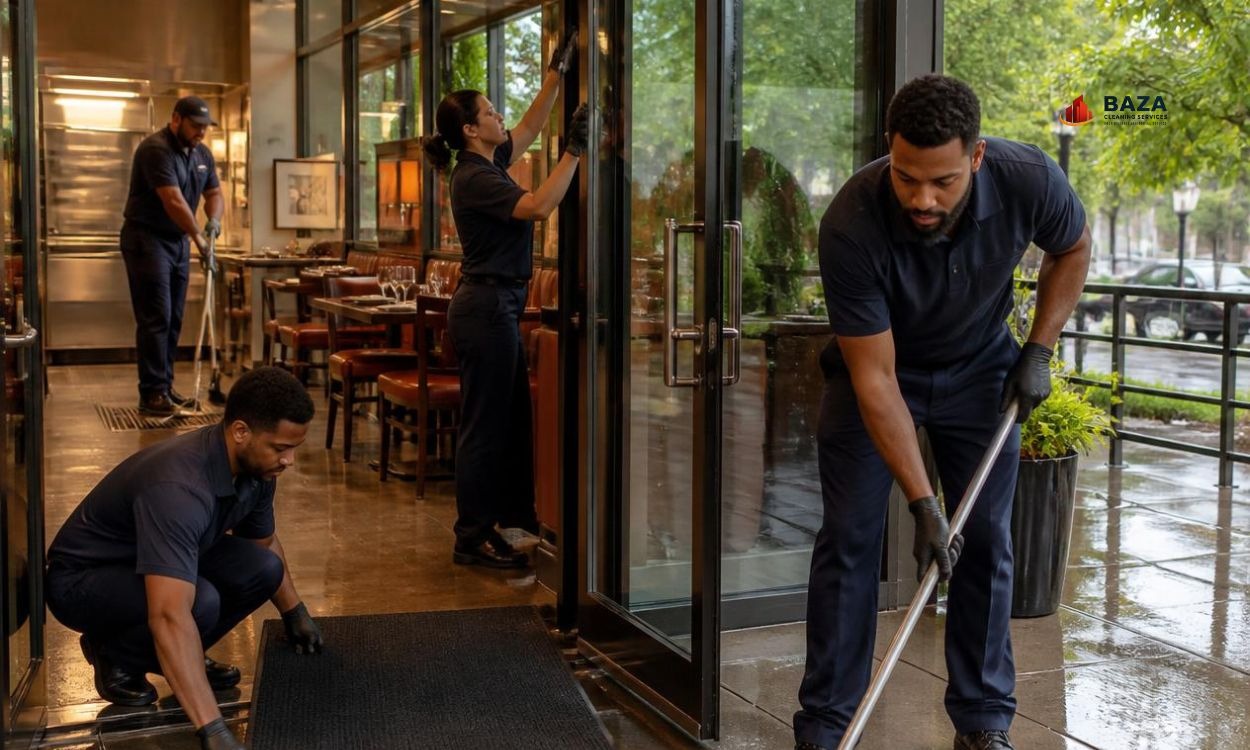
Prepare for Seasonal Cleaning Challenges in Birmingham
Birmingham restaurants experience seasonal changes that can affect cleaning needs. Spring pollen may enter through doors, loading areas, and ventilation systems. Summer heat and humidity can increase odors and make moisture control more important. Fall leaves and debris may collect around entrances, while winter rain can create muddy or slippery floors.
Cleaning plans should change with the season. Mats may need more washing during wet weather, doors and windows may require extra attention during pollen season, and drains or trash areas may need closer monitoring in warm months.
Seasonal increases in frying, grilling, or catering can also require more frequent degreasing. Managers should review the schedule several times a year.
Reduce Pest Risks Through Better Cleaning
Food, water, warmth, and shelter can attract pests. Cleaning is one of the most important preventive measures a restaurant can control.
Crumbs, spills, and standing water should be removed quickly. Food must be sealed and stored off the floor, cardboard should not accumulate, and trash should be removed on schedule.
Gaps around doors or pipes and signs such as damaged packaging or unusual insects should be reported immediately. Pest-control treatments work best when supported by strong sanitation and structural repairs.
Avoid Common Commercial Kitchen Cleaning Mistakes
Several mistakes can weaken an otherwise good cleaning program.
Common mistakes include using too much chemicals, reusing dirty clothes or mop water, cleaning around objects instead of beneath them, ignoring sanitizer contact time, and waiting until buildup becomes severe.
More cleaning products does not necessarily deliver better results. Excessive chemical use can leave residue, damage surfaces, or create strong fumes. Sanitizers and disinfectants also require the correct contact time stated on their labels.
Preventive service is usually easier to manage than a last-minute cleanup. Restaurants should address residue before it develops into a thick layer that requires additional labor, equipment, or downtime.
How a Professional Cleaning Partner Can Support Restaurant Operations
A dependable cleaning partner can do more than improve appearance. It can help restaurant managers create a repeatable standard across shifts and locations.
Professional cleaners may provide scheduled nightly service, weekly deep cleaning, floor care, restroom cleaning, dining-room cleaning, trash removal, high dusting, and customized kitchen support. The exact scope should be documented so both parties understand responsibilities.
Restaurants should communicate clearly about food-storage areas, alarms, locked rooms, chemical restrictions, equipment that must not be moved, and priority areas. Periodic walkthroughs and a clear feedback process help both parties adjust the plan.
For local operators comparing options for Restaurant Cleaning in Birmingham, AL, Baza Services LLC may be considered as part of a broader effort to maintain clean, professional restaurant environments.
A Practical Cleaning Schedule for Birmingham Restaurants
Every restaurant is different, but the following structure can serve as a starting point.
After Each Use
Clean and sanitize prep tools, cutting boards, slicers, and food-contact surfaces. Wipe spills and remove food debris from equipment.
During Each Shift
Monitor floors, trash containers, sinks, restrooms, and high-touch surfaces. Address spills and hazards immediately.
At Closing
Clean cooking surfaces, counters, sinks, appliance exteriors, floors, mats, drains, handles, trash containers, and storage areas.
Weekly
Degrease walls, clean under movable equipment, wash shelving, scrub floor edges, detail cold-storage interiors, and inspect pest-prone areas.
Monthly or Periodically
Deep-clean ovens, high surfaces, vents, floors, and hard-to-access areas. Review cleaning chemicals, inspect equipment, and coordinate professional maintenance.
As Needed
Arrange specialized hood cleaning, pest control, plumbing service, refrigeration repair, electrical work, or Heating Installation Services.
This schedule should be customized according to restaurant size, hours, menu, equipment, and staffing.
Final Thoughts
Commercial kitchen cleaning is an ongoing process, not a one-time project. Birmingham restaurants that combine daily routines, employee training, deep-cleaning schedules, maintenance reporting, and professional support are better positioned to operate consistently.
The most effective programs are clear and realistic. Employees know what to clean, managers verify the work, and specialized providers handle tasks that require additional time, tools, or expertise.
Grease control, floor care, drain maintenance, equipment cleaning, cold-storage organization, chemical safety, and high-surface cleaning should all be part of the plan. Restaurants should also connect sanitation with building maintenance by keeping trusted resources available for cleaning, plumbing, ventilation, refrigeration, and Heating Repair Services.
For restaurants seeking reliable Restaurant Cleaning in Birmingham, AL, a company such as Baza Services LLC can help create a customized approach based on the property’s layout, schedule, and cleaning priorities.
A cleaner kitchen supports more than compliance. It helps employees work efficiently, protects equipment, improves the appearance of the restaurant, and reinforces the professional standards customers expect from Birmingham’s food-service community.
About the Author
Maznur Rahman is a Louisiana SEO Expert and the founder of AIO SEO Expert. With over 10 years of experience, he specializes in Local SEO, Contractor SEO, Google Business Profile optimization, technical SEO, AEO, GEO, and link-building strategies. He helps contractors and local service businesses across Louisiana improve Google rankings, increase online visibility, and generate more qualified leads.