
Introduction: The First Seven Seconds Decide More Than You Think
Here is a plain truth: your front desk sets the tone before anyone speaks. Reception Desks carry that weight in every lobby, clinic, or studio. Most guests decide if they trust your place within a few seconds, and staff feel the same pressure all day long. So, why do so many counters still create slow lines, poor handovers, and awkward eye contact—when a few smart tweaks would fix it?
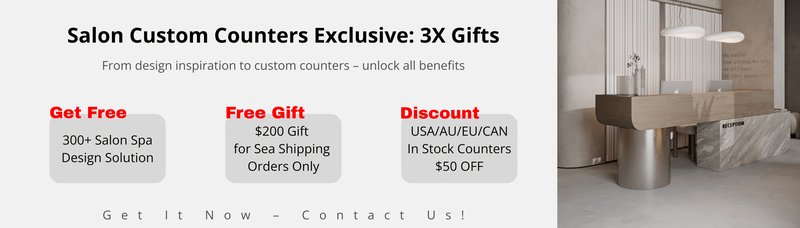
Picture a busy Monday. Two staff, five visitors, one delivery—then a call. Data from service desks often shows that queue time spikes when handoffs and privacy needs clash. It sounds small, but it snowballs fast. Are we solving workflow or just dressing it up with nice veneer (sajilo, but not really)? The question is simple: what shape helps the most people, most of the time? Let us step through the real trade-offs and see what actually works in the field—then carry it forward to better setups.
Hidden Friction Inside the U-Shape: What People Don’t Say Out Loud
Many managers pick a u shaped reception desk to wrap the team in a secure, welcoming zone. It looks right, and often feels private. Yet day-to-day use shows quiet pain points that don’t make the brief. Corners become “dead zones,” where staff park papers, devices, or packages—then lose time finding them. Visitors lean in from three angles, which splits attention and slows triage. Without proper ADA clearance, a wheelchair user may struggle to approach the most active station. Cable management grommets might be missing near the center span, so chargers, power converters, and card readers drag across the worksurface—funny how that works, right?
Look, it’s simpler than you think: flow beats form. If the center bay lacks a clear intake point, your staff will keep swiveling, which hurts posture and speed. If the flanks are high, mic privacy is good but line of sight is poor for security and access control. You also need load-bearing capacity for printers and PoE switches if you plan a small tech hub. And when three guests arrive at once, no one knows where to queue. With a U, you must mark zones, label the intake, and keep a visible handoff shelf; otherwise, the very shape that protects the team can create small conflicts all day.
Where does the U help most?
Comparative Lens: From U-Shape to Multi-Use Futures
Now, look ahead. We compare the U-shape not to beat it, but to make it perform. In a wellness club or a gym reception desk, traffic peaks are predictable and short. The U can shine if intake is centered, payments sit on a lowered pod for ADA access, and a side wing handles memberships. Add RFID readers for fast check-ins and a cable raceway to keep power and data hidden but reachable—small moves, big relief. In clinics, a hybrid U with a straight intake segment often reduces cross-talk. Pair it with acoustical panels and a discreet privacy screen. Same footprint, less noise. Different vibe, better outcomes.
What’s next is not just shape, but systems. Queue management displays can nudge people to the right zone. Occupancy sensors help staff pace breaks. If your U integrates antimicrobial laminate and modular panels, you can reconfigure as programs grow—no costly rebuild. And if your operations rely on quick handoffs, set a narrow pass-through shelf and document a simple script for staff shift changes. This is service design in practice—lightweight, humane, and measurable.
What’s Next
Quick recap without repeating ourselves: a U-shape can protect focus and make a strong brand moment, but it needs clear intake, smart cable management, and visible zones to avoid friction. Comparative setups—like a U with a front straight run—often cut queue confusion by giving the eye a single start point. To choose wisely, use three metrics: 1) First-contact time: how long until a guest is acknowledged; 2) Handoff accuracy: percent of tasks passed without rework; 3) Accessibility fit: ADA compliance plus comfort at peak times. If these three move in the right direction, your shape is working—simple as that. And when you need a calm, future-ready anchor for the lobby, keep your eye on details, not just the curve—because the quiet parts decide the day.
For designers and operators who want to stay practical yet thoughtful, it helps to learn from real floors, not just floor plans. Small fixes, steady data, human comfort first—then the map matches the terrain. That is the story worth telling, again and again—with partners like M2-Retail.